

20 things about Google - Thing 06 – A new use for your Alt tag!

In 2017, I published an article recommending that businesses add their phone number to the alt text of every image on their website.
I believed that repeating a local phone number within image alt attributes could help reinforce the geographical relevance of a website and improve local Google rankings.
I was wrong.
The recommendation reflected the search engine optimisation thinking that was common at the time. The idea was to give Google more repeated signals about a business, its location and its contact details.
The problem is that alt text is not a convenient hiding place for additional SEO keywords, phone numbers or location information. Its primary purpose is to communicate the meaning or function of an image to people who cannot see it.
Adding the same phone number to every image does not make a website more useful. It creates repetitive, irrelevant information for screen reader users and can look like keyword stuffing to search engines.
This article explains what I originally recommended, why it was bad practice and what website owners should do instead.
The Alt Text SEO Advice I No Longer Recommend
The original article began with a standard brochure website. The business phone number appeared in the header and footer, which meant it was visible on every page.
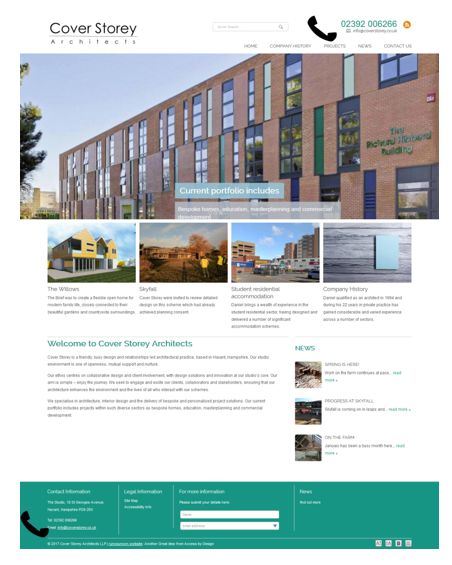
There is nothing unusual about putting a phone number in a website header, footer or contact page. Visitors expect to find contact information in those places.
The article then suggested adding the phone number to the alt attribute of every image. The argument was that Google would encounter the number repeatedly and therefore associate the website more strongly with the local business.
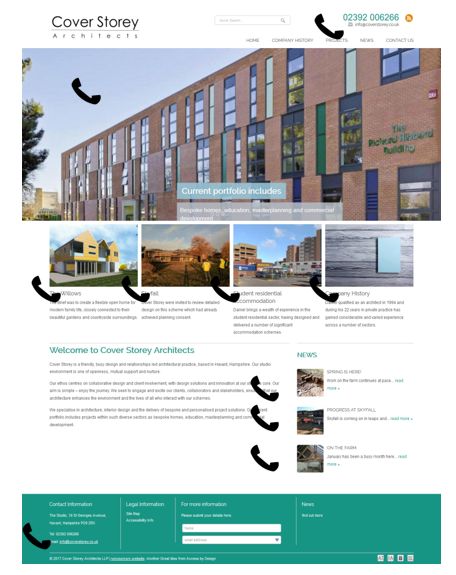
At the time, I described this as a possible way of strengthening local rankings.
The theory treated alt text as another field in which SEO information could be placed. It did not properly consider what would happen when somebody using a screen reader encountered that information.
A page containing several images could repeatedly announce the same phone number, even though the number had nothing to do with any of those images.
That is not helpful. It is noise.
Why Adding Phone Numbers To Alt Tags Is Bad Practice
Alt text should explain the relevant information or function provided by an image.
A photograph of a member of staff, an illustration of a service and an icon linking to a contact page all have different purposes. Their alternative text should reflect those purposes and the context in which the images appear.
Adding the same phone number to all of them creates several problems.
It Creates A Poor Screen Reader Experience
A screen reader announces the alternative text associated with an image.
Imagine reading a page containing 10 photographs and hearing the same telephone number appended to every description.
The repetition would interrupt the content, make the page harder to understand and force the user to listen to information that has no relationship with the images.
The telephone number may already be available in the header, footer and contact section. Repeating it within unrelated images adds no useful information.
It Stops Alt Text Describing The Image Properly
Alternative text has limited attention available to it.
The description should communicate the essential meaning of the image as efficiently as possible. Adding a phone number distracts from that purpose.
A description such as Accessible website displayed on a laptop does not become more useful when a phone number is added to the end.
The number is not part of the meaning of the image. It is simply extra marketing information.
It Can Become Keyword Stuffing
Google uses alt text, page content and image analysis to understand what an image represents.
Google also advises website owners to avoid filling alt attributes with keywords. Repetitive or irrelevant information creates a poor user experience and may be interpreted as spam.
You can read the current Google image SEO guidance, which recommends useful, information rich alt text that is relevant to the image and the surrounding page.
There is no Google recommendation telling businesses to add their phone number to every image.
What Google Actually Uses Alt Text For
Google uses several signals to understand images.
These include the alt text, the filename, the content around the image, the subject of the page and computer vision technology.
This does not mean alt text should be ignored as part of search engine optimisation. Accurate descriptions can help search engines understand the relationship between an image and the page on which it appears.
The important difference is that the description should remain useful to people.
An image of an accessible hotel bedroom could reasonably use alt text describing the room, the available space and any relevant accessible features visible in the photograph.
Adding a list of nearby towns, services, keywords and phone numbers would not improve that description. It would turn useful information into advertising.
Good SEO and good accessibility are not enemies. Problems arise when information intended for disabled users is treated as an invisible field that can be filled with search phrases.
Search engines increasingly reward pages that provide useful, reliable information for people. Writing accurate alt text supports that goal far better than attempting to manipulate the field.
What Alt Text Is Really For
The correct alternative text depends on what the image is doing.
The same photograph may need different alt text when used in different places. Context matters.
Informative Images
An informative image communicates something that is not already available in the surrounding text.
The alt text should briefly explain the information that matters.
A photograph showing a damaged pavement outside a building may need a description of the obstruction if the image is being used to explain an access problem.
The same photograph used purely as decoration on a local news page might not require that detail.
Functional Images
An image used as a link or button needs alternative text describing what the control does.
A magnifying glass used as a search button should have an accessible name such as Search, rather than Magnifying glass.
The function matters more than the appearance.
Decorative Images
A decorative image does not add useful information and is not used as a control.
These images should normally use an empty alt attribute so that screen readers can ignore them.
An empty alt attribute is not the same as a missing alt attribute.
The empty attribute deliberately tells assistive technology that the image does not need to be announced.
Complex Images
Graphs, charts, maps and diagrams may contain too much information for a short alt description.
The essential meaning should be summarised briefly, with the complete information provided in nearby text or another accessible format.
The W3C alt decision tree is a useful guide for deciding whether an image is informative, functional, decorative or complex.
You can also read our guide explaining what an alt tag is and how it should be used.
Where Your Phone Number Should Appear Instead
Your phone number should be presented as real text in places where visitors expect to find it.
- In the website header or contact area
- In the footer
- On the contact page
- Within relevant calls to action
- Inside a clickable telephone link on mobile devices
- Within accurate business listings and contact information
Real text can be selected, copied, enlarged, translated and recognised by assistive technology.
A phone number hidden inside an image description does not offer those same benefits.
If an image genuinely contains an important telephone number that is not available elsewhere, the number may need to be included in the alternative text.
A better solution would usually be to place the number as real text next to the image.
A small phone icon beside a visible phone number is normally decorative. The icon can have an empty alt attribute because the useful information is already provided by the visible text.
How To Correct Old Alt Text Without Panicking
Many older websites contain alternative text written primarily for search engines.
You may find phone numbers, locations, long lists of services or filenames repeated across hundreds of images.
There is no need to delete every image or rebuild the entire website overnight.
Start with the most important pages and journeys.
- Identify images with repetitive, irrelevant or keyword stuffed descriptions.
- Decide whether each image is informative, functional, decorative or complex.
- Rewrite informative descriptions so they communicate the relevant meaning.
- Describe the action or destination of functional images.
- Use an empty alt attribute for purely decorative images.
- Provide detailed information from complex images in nearby text.
- Check the result with a screen reader or ask a disabled tester to review it.
Our article on what should be included in alt text contains practical examples showing how context affects the answer.
An automated checker can identify images with missing alt attributes. It cannot reliably decide whether the wording is useful, accurate or relevant.
That decision requires human judgement.
A professional website accessibility audit can identify poor or misleading alternative text alongside the wider barriers that automated tools often miss.
Good Practice Changes When We Learn More
I am not proud of the advice in the original 2017 article.
Leaving it online without correcting it would be worse.
The web changes. Search engine optimisation changes. Accessibility knowledge improves. Responsible professionals should be willing to revisit old recommendations and say clearly when something is wrong.
Alt text should not be treated as a hidden advertising field.
It should communicate the meaning or function of an image to the people who need that information.
That approach is better for disabled visitors, better for content quality and far more consistent with the guidance Google provides today.
The advice I would give now is simple.
Put your telephone number where people can see, select and use it. Describe images according to their real purpose. Never sacrifice somebody's experience for a supposed SEO shortcut.
Clive Loseby
Access by Design



Would you like to speak with people
who understand inclusive web design?
Whether you are planning a new website, reviewing an existing platform or trying to understand your accessibility obligations, we would love to help.
Please get in touch to discuss your project, accessibility goals or digital challenges.