

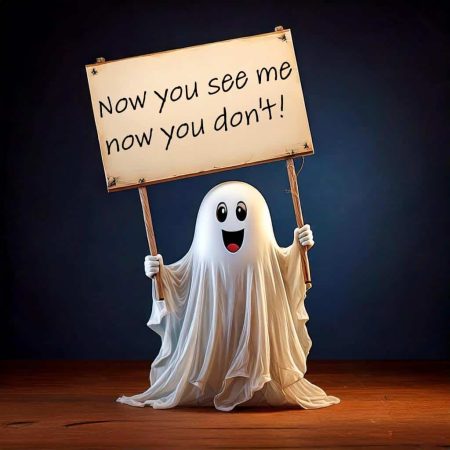
Here’s a novel experience, an invisible Accessibility Statement!
Should you have a statement?
One of the first things I check when I am working on a website audit is the existing accessibility statement, if there is one.
If your organisation is within the public sector, you are required by law to have a statement on your website. It must comply with Government legislation, meaning it should be structured in a certain way.
If your organisation is within the private or charity sectors, you are not currently required to have a statement, however, by not having one, you are more vulnerable to legal action under the Equality Act, if your website is inaccessible for disabled people.
Given that 95% of the top 1 million websites tested this year fail basic accessibility checks, it is highly likely that your website will not be accessible and, by having not a statement at all, it suggests that you have no interest in making your website accessible for disabled people or that you simply have not thought of them. Ironically, this contradicts your statement on diversity, equity and inclusion, which may well be present!
What types of statements are there?
Anyway, the statements that I do come across, used to fall into one of 3 categories.
- They have already had an web audit of their website and the statement is an honest reflection of the shortcomings of the website and when those shortcomings will be resolved
- They have not had an audit of their website, they do not fully understand the accessibility issues they have but they do know they exist. They are apologetic and friendly in tone.
- They claim to be compliant and that is all there is to be said, even though it is clear that they do not actually know what being compliant means.
Given that the idea of a fully accessible website is something of a unicorn, option 3 is risky and best avoided.
Why have you now got another category?
Anyway, after a recent audit, I must now add a 4th category: Invisible!
The website in question was quite a large one, for a non-profit organisation in the UK. There was no statement apparent on the home page and I could not see it hidden away within their Privacy Policy or in any other section.
While examining the code on the home page, which I do by removing all of the styling, I noticed a link to a statement. The statement itself fell into category 2 but the link to it was the same colour as the background, so it was invisible! Of course, the link would not be invisible to people using screen readers, as the link would be read in the normal way, however obviously not everyone who has a disability is visually impaired!
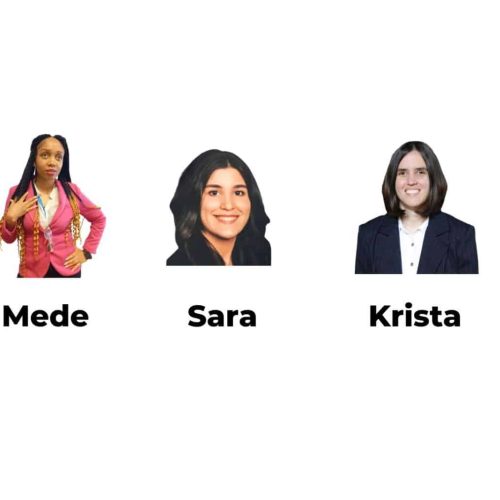
Iona, for example, has a hand disability and cannot use a mouse. She also has ADHD. Sara has dyspraxia and ADHD. Both of them are valuable members of my team of website testers and both of them can see a computer screen. Neither of them could access thes statement!
Thankfully, it can be swiftly resolved!
Anyway, this is an easy fix and their website now shows it clearly. It will soon be replaced by the compliant one I provided them, once they have formulated their action plan to resolve the issues and can provide a timeline for doing so!
If you would like to have a chat about your website’s access statement (or lack of one!), please do book yourself in for a chat.
Caption: a cartoon of a friendly ghost who is holding up a sign. Text reads now you see me, now you don’t

Would you like to speak with people
who understand inclusive web design?
Whether you are planning a new website, reviewing an existing platform or trying to understand your accessibility obligations, we would love to help.
Please get in touch to discuss your project, accessibility goals or digital challenges.