
fallback

What Is Web Accessibility And Training Matters
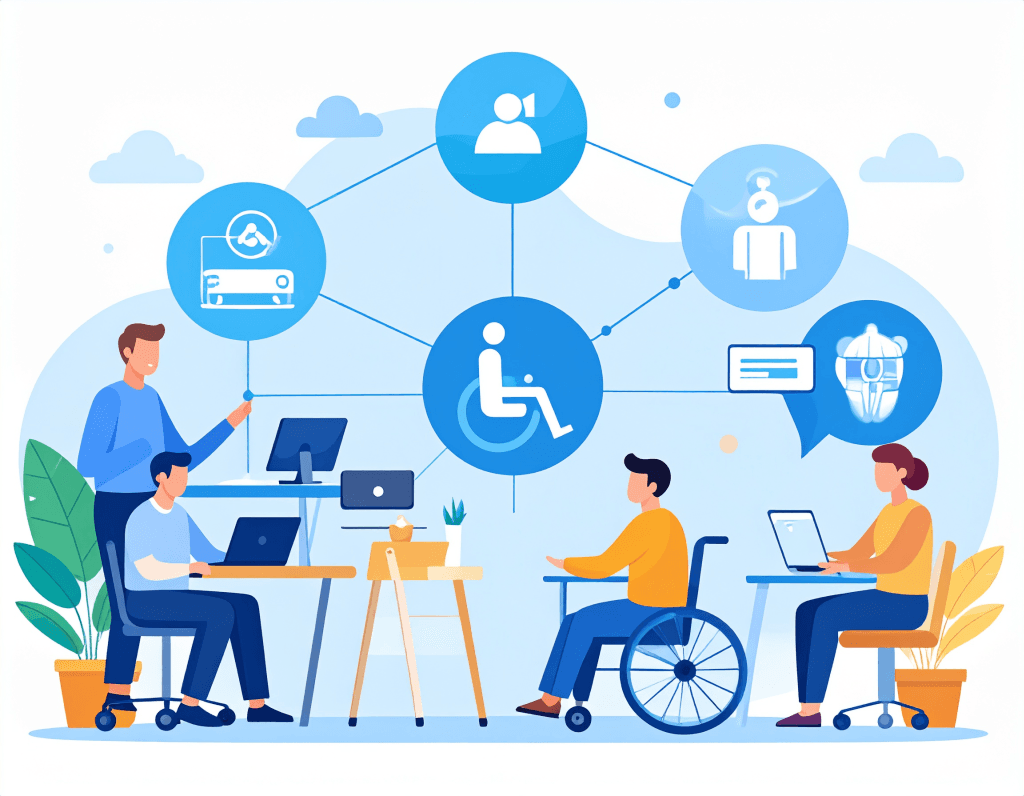
When organisations ask what is web accessibility, they are often thinking about legal requirements or technical fixes. In truth, web accessibility is about much more than compliance. It is about creating an inclusive digital environment where everyone, including people with disabilities, can use and enjoy your website. From designing simple navigation and clear content to ensuring videos have captions and forms are properly labelled, web accessibility makes the online world open to all. This is why accessibility training is vital.
At the same time, training gives teams the knowledge and practical skills they need to achieve accessibility in a consistent and sustainable way. Training ensures that accessibility is not a one-off project but a core part of your organisation’s culture. In this blog, we will explore what web accessibility really means, why it matters, and how training can help your team create websites that are both inclusive and effective.
What Is Web Accessibility?
The phrase what is web accessibility can be defined in many ways, but at its heart, it is about equal access to digital content. A website is considered accessible when users with visual, auditory, motor, or cognitive impairments can interact with it as easily as any other user. Accessibility is based on four key principles — a website must be perceivable, operable, understandable, and robust. These principles, outlined in the Web Content Accessibility Guidelines (WCAG), provide a clear roadmap for making websites usable by everyone.
Web accessibility is also about inclusivity for people who may not identify as disabled but encounter barriers online. This can include older adults with declining eyesight, people with temporary injuries, or those using devices in low-light conditions. By asking yourself what is web accessibility, you begin to see how small design decisions can have a big impact on usability for all users.
Why Does Web Accessibility Matter?
When discussing what is web accessibility, the “why” is just as important as the “what.” There are three major reasons why every organisation should prioritise accessibility: compliance, user experience, and business performance. Across the UK, United States, and Europe, regulations now require digital services to meet specific accessibility standards. Failure to comply can result in lawsuits, fines, and negative publicity.
Accessibility also leads to better user experiences. Websites that are easy to navigate and understand benefit everyone, not just those with disabilities. Features such as clear headings, logical content structure, and intuitive navigation improve usability for all visitors. Beyond that, businesses that invest in accessibility often see measurable gains such as reduced bounce rates, higher engagement, and better search rankings.
Key Principles of Web Accessibility
When answering the question what is web accessibility, we must talk about the key principles that underpin inclusive design:
- Perceivable: Information and interface elements must be presented in ways that all users can perceive.
- Operable: Users must be able to navigate and interact with the website using various devices and assistive technologies.
- Understandable: Content and interface operation must be clear and easy to understand.
- Robust: Websites must work reliably across different browsers, devices, and assistive technologies.
These principles serve as the foundation for any accessibility strategy. A web accessibility audit can measure how well a website meets these standards and provide actionable recommendations for improvement.
Common Barriers in Web Accessibility
To understand what web accessibility is, it helps to look at the most common barriers users face. These include:
- Images without descriptive alternative text
- Videos without captions or transcripts
- Poor colour contrast between text and background
- Forms that are not properly labelled or keyboard-accessible
- Complex navigation that confuses screen reader users
Fixing these barriers often requires both technical and design adjustments. A thorough audit can reveal these issues and provide a clear plan for resolution.
What Is Training In Website Accessibility?
While audits identify problems, training equips your team to prevent them from arising in the first place. Training ensures that designers, developers, and content creators understand the principles of accessibility and know how to apply them throughout every stage of a project. It transforms accessibility from a reactive fix into a proactive approach.
Website training covers everything from the basics of WCAG compliance to advanced testing techniques. It empowers teams to create content and interfaces that are accessible by default, reducing the need for costly redesigns later on. By investing in training, organisations build in-house expertise that pays dividends over time.
Why Invest In Training?
Many organisations ask why they should invest in training in website accessibility when automated tools are readily available. The answer is simple — automated tools only catch a fraction of issues. True accessibility requires human judgement, empathy, and expertise. Training helps teams develop the mindset and skillset necessary to identify subtle but critical issues that machines cannot detect.
Additionally, training is often a legal and ethical necessity. As laws and regulations evolve, organisations that fail to understand accessibility risk falling behind or facing compliance challenges. Training ensures that your team is always up to date on best practices and requirements.
What Does Training Include?
A strong website training programme covers a wide range of topics, including:
- Understanding the principles of WCAG and ARIA
- Designing for keyboard and screen reader compatibility
- Writing accessible content and using descriptive alt text
- Testing websites using a combination of automated and manual tools
- Learning how to create accessible PDFs and multimedia content
Training can be tailored to your team’s specific needs, ensuring that developers, content writers, and UX designers all get the guidance they require. They will be then be on a journey to understand what is web accessibility.
The Benefits of Training in Website Accessibility
When organisations embrace training, they experience a range of benefits. These include improved site performance, better customer satisfaction, and reduced risk of legal challenges. Accessibility improvements also lead to better SEO results, as search engines reward clear structure, proper tagging, and fast-loading content.
Moreover, training fosters a culture of inclusion within your organisation. Teams that understand the importance of accessibility are more likely to design with empathy, resulting in products and services that stand out in the marketplace.
Real-World Impact of Training in Website Accessibility
Consider the difference training can make. We have seen ecommerce businesses increase sales by simplifying checkout flows identified as problematic during audits. Charities have improved donation rates by making forms keyboard-friendly and ensuring all interactive elements have clear labels. These examples highlight how training is not just about compliance — it is about improving the entire user experience.
Practical Steps to Get Started
If you want to improve your understanding of what web accessibility is and take action, start with a professional audit. An audit gives you a clear overview of your website’s strengths and weaknesses. From there, arrange training for your team to ensure lasting improvements.
Resources such as the W3C Web Accessibility Initiative and official guidance on gov.uk are excellent places to start learning.
Why Choose Us for Audits and Training?
We specialise in audits and training that go beyond the basics. Our team includes disabled testers who provide invaluable insights into real-world barriers. We do not just tell you what is wrong; we show you how to fix it and build better, more inclusive digital experiences.
If you are ready to find out what is web accessibility and how to make it a core strength of your organisation, we are here to help. Book yourself in to take that vital first step.
Contact Us Today
Now is the perfect time to invest in accessibility. Book a consultation today and discover how training in website accessibility and audits can transform your website.
Contact us to take the first step towards a more accessible and user-friendly digital future.


Would you like to speak with people
who understand inclusive web design?
Whether you are planning a new website, reviewing an existing platform or trying to understand your accessibility obligations, we would love to help.
Please get in touch to discuss your project, accessibility goals or digital challenges.